Joy Oslund
Date: August 10, 2026
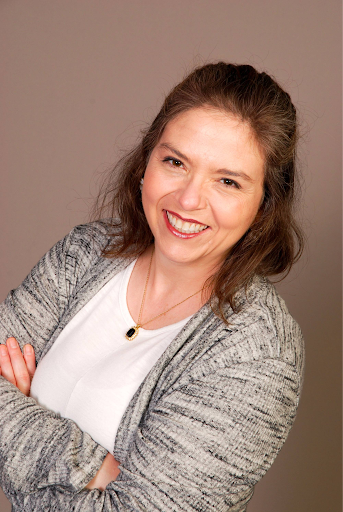
Joy Oslund
Interviewed by: Sasha Rudow, MSU graduate student, MI-AMTE membership committee and graduate student representative
I was able to sit down and chat with Joy Oslund, an elementary mathematics teacher educator at Grand Valley State University, this summer about her experiences as a mathematics teacher educator and Mi-AMTE member. Highlights from our conversation are captured below.
Joy began her career as an elementary school mathematics teacher interested in how she could improve equitable practices in her classroom. This led her to wonder about teacher learning, dispositions, and identity. Her own experiences with identity have also influenced her teaching and research.
Q) What drew you to MI-AMTE initially and what made you think it would be a good fit for you?
“When I first joined MI-AMTE I was working in a small, private, independent institution and those kinds of institutions often don’t have the resources to support going to a national or international conference. MI-AMTE was affordable, the conference was more local. It gave me support and networking that I didn’t always get in other places.”
“I think a lot of what happens that affects us in teacher education in terms of policy, it happens at the state level and it’s really important for us to have a voice on those things”
Q) What aspects of MI-AMTE membership have been most valuable to you?
Joy emphasized that both “the formal and informal connections” have been the most valuable aspects of her membership. She described how those connections can be fostered through Mi-AMTE webinars, lunch-and-learns, mini-grants, and workshops. She has even contributed to the community herself by leading a workshop on complex instruction.
Q) What’s a project, question, or initiative you’ve been especially excited about recently? What impact do you hope that work will have?
Joy’s newest interest is “mathematics and mathematics teaching and learning as embodied.” She wants to further explore what embodied mathematical and teaching knowledge teachers are using or what comes out as “maybe intuition, or a sense or an impulse to take a lesson a certain way”
“I think teachers have a lot of knowledge and we haven't necessarily tapped into what it is yet. Maybe they didn't take as many math classes as a secondary teacher or a mathematician. But that knowledge–it's different than that. It's a different kind of knowledge to teach elementary and early childhood in particular. And so I really want to alert people in the math ed community that elementary teaching is a very knowledgeable thing, even if the knowledge hasn't looked the way they expect yet”
Q) What is one issue, or opportunity in mathematics teacher education that you think deserves more attention?
“Teaching is a skillful, knowledgeable practice that takes learning and professional development and specialized knowledge”
Q) What’s bringing you joy in your work right now?
Joy recently returned from presenting at the international Psychology of Mathematics Education (PME) conference. She talked about continuing to foster those connections and being able to connect to some family history at the same time.
She also discussed being able to see her complex instruction work come to life in teacher education classrooms, explaining that she finds joy in getting into schools, specifically working with prospective elementary teachers in Young 5’s and kindergarten. She finds it inspiring to watch the prospective teachers learn how young students learn mathematics.
Q) If you could collaborate with anyone - past or present - who would it be and why?
The first person Joy mentioned working with was actually “Anne of Green Gables” whom she imagined as a teacher partner. She explained, “She has problems, but she’s enthusiastic and she’s trying new things and getting involved with students.”
She followed up by bringing up Helen Featherstone, as she was “a fantastic mathematics teacher, educator and mentor.” She went on to explain, “whenever I am trying to think about what to do, I often will think, well, what would Helen say about this?”
Q) What are you currently reading, watching, or listening to that you’d recommend to others (not related to mathematics education)?
Joy is a member of an adoptee-only book club where the members are all adoptees who read books by authors who were adopted. She also recommends The West Wing as a comfort show.
Q) What would you tell someone who is considering joining MI-AMTE?
“It’s definitely worth it”
“Get involved enough to meet people…whether it's through conversations among colleagues or a book group or a webinar”
